
What is the Gestational Surrogacy Process: a step-by-step guide for IPs
Gestational Surrogacy Process
Gestational surrogacy process is when a surrogate carries a child conceived using the intended parents’ or donors’ egg and sperm—meaning she has no genetic link to the baby. It’s the most common type of surrogacy today, especially in international programs. In this step-by-step guide, we’ll walk you through the entire gestational surrogacy journey, from selecting a surrogate and IVF to legal contracts, pregnancy, and bringing your baby home. If you’re considering this path to parenthood, this guide will help you understand what to expect at every stage.
Starting the Gestational Surrogacy Process is not an easy task. However, with our 15 years of experience in this domain, we make surrogacy possible. Let us explore how surrogacy works with our stepwise guide.
📅 Gestational Surrogacy Process: Step-by-Step Timeline
| Step | Estimated Time | What Happens |
|---|---|---|
| 1. Initial Consultation | 1–2 Weeks | Meet with surrogacy agency or consultant to discuss goals, budget, and eligibility. |
| 2. Screening & Profile Setup | 2–4 Weeks | Psychological and medical evaluation for intended parents and surrogate selection process begins. |
| 3. Surrogate Matching | 1–3 Months | Agency matches you with a medically and psychologically approved surrogate. |
| 4. Legal Contracts | 2–4 Weeks | Independent lawyers draft and finalize agreements between parents and surrogate. |
| 5. IVF & Embryo Creation | 4–8 Weeks | Eggs and sperm (from parents or donors) are used to create embryos in a lab. |
| 6. Embryo Transfer | 2–3 Weeks | Embryo is transferred to the surrogate’s uterus after a medical preparation cycle. |
| 7. Pregnancy Monitoring | 9 Months | Surrogate attends regular prenatal checkups; intended parents receive updates. |
| 8. Birth & Parentage Process | 2–6 Weeks Post-Birth | Baby is born; legal steps for birth certificate and international travel (if needed). |
Get in touch for a Free Surrogacy Consultancy:
📲 +91-8800481100 ( WhatsApp, Line, Viber)
Why Intended Parents Choose Complete Surrogacy for a Safe, Smooth & Successful Surrogacy Journey:
🌍 Access to multiple surrogacy destinations with 15+ years of international experience
🏥 Partnerships with top-tier fertility clinics and agencies, backed by references from past clients
👩🦱 Diverse egg donor options: Asian, Caucasian, African, Oriental, and more
💸 Transparent and affordable pricing—direct payments with no extra agency fees
🔒 No hidden costs—all charges are agreed upon upfront
🤝 Dedicated case manager for personalized support
📲 Fast, honest, and clear communication throughout
📑 Full legal support for visas, documentation, and baby exit processes
🚚 Assistance with frozen sperm/embryo shipment logistics
Gestational Surrogacy Timeline
Understanding Gestational Surrogacy- How long surrogacy takes?
Gestational surrogacy is an arrangement where a woman (the gestational carrier) carries and delivers a baby for another person or couple (the intended parents). Unlike traditional surrogacy, in gestational surrogacy, the surrogate is not genetically related to the child.
Key Points:
- The embryo is created using the intended parents’ eggs and sperm or donor gametes
- The surrogate’s eggs are not used in gestational surrogacy
- This process allows intended parents to have a genetic connection to their child
The Gestational Surrogacy Process: Step by Step
The gestational surrogacy journey involves several steps:
- Initial Consultation: Meeting with a fertility specialist or surrogacy agency
- Matching: Finding and selecting a suitable gestational carrier
- Medical Screening: Comprehensive health checks for all parties involved
- Legal Contracts: Drafting and signing surrogacy agreements
- IVF Process: Creating embryos using intended parents’ or donor gametes
- Embryo Transfer: Transferring the embryo to the gestational carrier
- Pregnancy and Monitoring: Regular check-ups and prenatal care
- Delivery and Birth: The birth of the baby and legal parentage establishment
Legal Considerations in Gestational Surrogacy
Legal aspects of gestational surrogacy vary by country and even by state within countries. It’s crucial to work with an experienced attorney specializing in reproductive law.
|
Legal Aspect |
Description |
|
Surrogacy Contract |
Outlines rights, responsibilities, and expectations of all parties |
|
Parental Rights |
Establishes legal parentage for intended parents |
|
Insurance Coverage |
Addresses medical insurance for the surrogate and the baby |
|
Compensation |
Details surrogate compensation and reimbursement |
|
Birth Certificate |
Ensures intended parents are listed on the birth certificate |
Always consult with a legal professional familiar with surrogacy laws in your jurisdiction.
 Medical Aspects of Gestational Surrogacy
 Medical Aspects of Gestational Surrogacy
The medical process in gestational surrogacy primarily revolves around IVF (In Vitro Fertilization). Here’s an overview of the key medical steps:
- Ovarian Stimulation: The intended mother or egg donor undergoes hormonal stimulation to produce multiple eggs
- Egg Retrieval: Eggs are collected from the intended mother or donor
- Sperm Collection: Sperm is collected from the intended father or donor
- Fertilization: Eggs and sperm are combined in the laboratory to create embryos
- Embryo Culture: Embryos are monitored as they develop
- Endometrial Preparation: The surrogate’s uterus is prepared for embryo transfer
- Embryo Transfer: One or more embryos are transferred to the surrogate’s uterus
- Pregnancy Monitoring: Regular check-ups and prenatal care throughout the pregnancy
Emotional and Psychological Considerations
 Emotional and Psychological Considerations
Gestational surrogacy can be an emotionally complex journey for all parties involved. It’s important to consider the psychological aspects:
- For Intended Parents:
- Coping with infertility or inability to carry a pregnancy
- Anxiety about the surrogate’s health and pregnancy progress
- Excitement and anticipation of becoming parents
- For Gestational Carriers:
- Motivation to help others create a family
- Managing emotional attachment during pregnancy
- Balancing surrogacy with personal life and family
- For Both Parties:
- Building a relationship based on trust and communication
- Navigating boundaries and expectations
- Preparing for the emotional impact of the birth and separation
Many surrogacy programs require psychological counseling for both intended parents and surrogates to address these emotional aspects.
Costs of Gestational Surrogacy
How much does gestational surrogacy cost? Gestational surrogacy can be a significant financial investment. Costs can vary widely depending on individual circumstances, location, and specific arrangements. Here’s a general breakdown of potential expenses:
|
Expense Category |
Estimated Cost Range (USD) |
|
Agency Fees |
$15,000 – $30,000 |
|
Surrogate Compensation |
$30,000 – $60,000 |
|
IVF and Medical Expenses |
$20,000 – $40,000 |
|
Legal Fees |
$5,000 – $15,000 |
|
Insurance |
$15,000 – $30,000 |
|
Miscellaneous Expenses |
$5,000 – $10,000 |
|
Total Estimated Cost |
$90,000 – $185,000+ |
Note: These are rough estimates and can vary significantly based on individual circumstances and location.

Find a Surrogate Mother
How to Find a Gestational Surrogate
There are several ways to find a gestational surrogate:
- Surrogacy Agencies: Provide matching services and manage the process
- Fertility Clinics: Some clinics have in-house surrogacy programs
- Personal Networks: Some intended parents find surrogates through friends or family
- Online Communities: Surrogacy support groups and forums
- Attorneys: Reproductive law attorneys may have connections to potential surrogates
When choosing a surrogate, consider factors such as:
- Health history and lifestyle
- Emotional stability and support system
- Alignment with your values and expectations
- Previous surrogacy experience (if any)
- Geographical location
The surrogacy process takes 18 months to 24 months, depending upon the individual circumstances
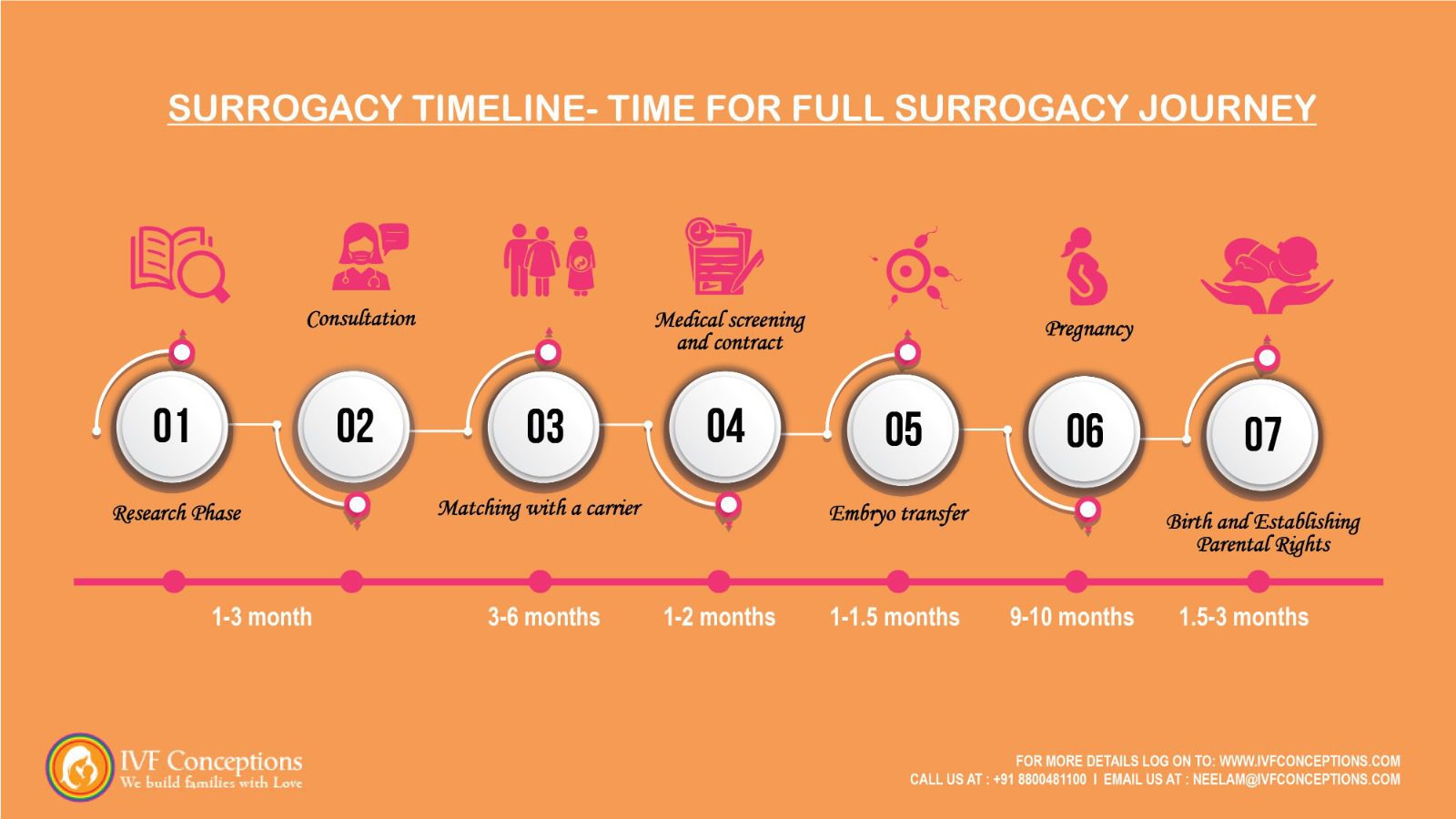
Outlines the surrogacy process timeline for gay intended parents:
| Stage | Description of Stage | Duration |
| Research Phase | Explore family-building options and decide on surrogacy. | Personal timeframe |
| Consultation and Application | Choose a surrogacy agency, sign an agreement, and start embryo creation (if needed). | 1-3 Months |
| Matching | The agency finds and presents potential gestational carriers. Meet and decide on a match. | 3-6 Months |
| Medical Screening and Contracts | Carrier undergoes medical and psychological screening. Sign a surrogacy contract. | 1-2 Months |
| Embryo Transfer | Prepare for embryo transfer. Success may take multiple attempts. | 1-1.5 Months |
| Pregnancy | Gestational carrier’s pregnancy, approximately 40 weeks. | 9-10 Months |
| Birth and Postpartum | Baby’s birth, establish parental rights, and the postpartum period. | 1.5-3 Months |
Please keep in mind that the durations mentioned in the table are approximate and can vary depending on individual circumstances and other factors. Always consult with a reputable surrogacy agency or professional to get personalized guidance throughout the surrogacy journey.

How does surrogacy work
How does surrogacy work?
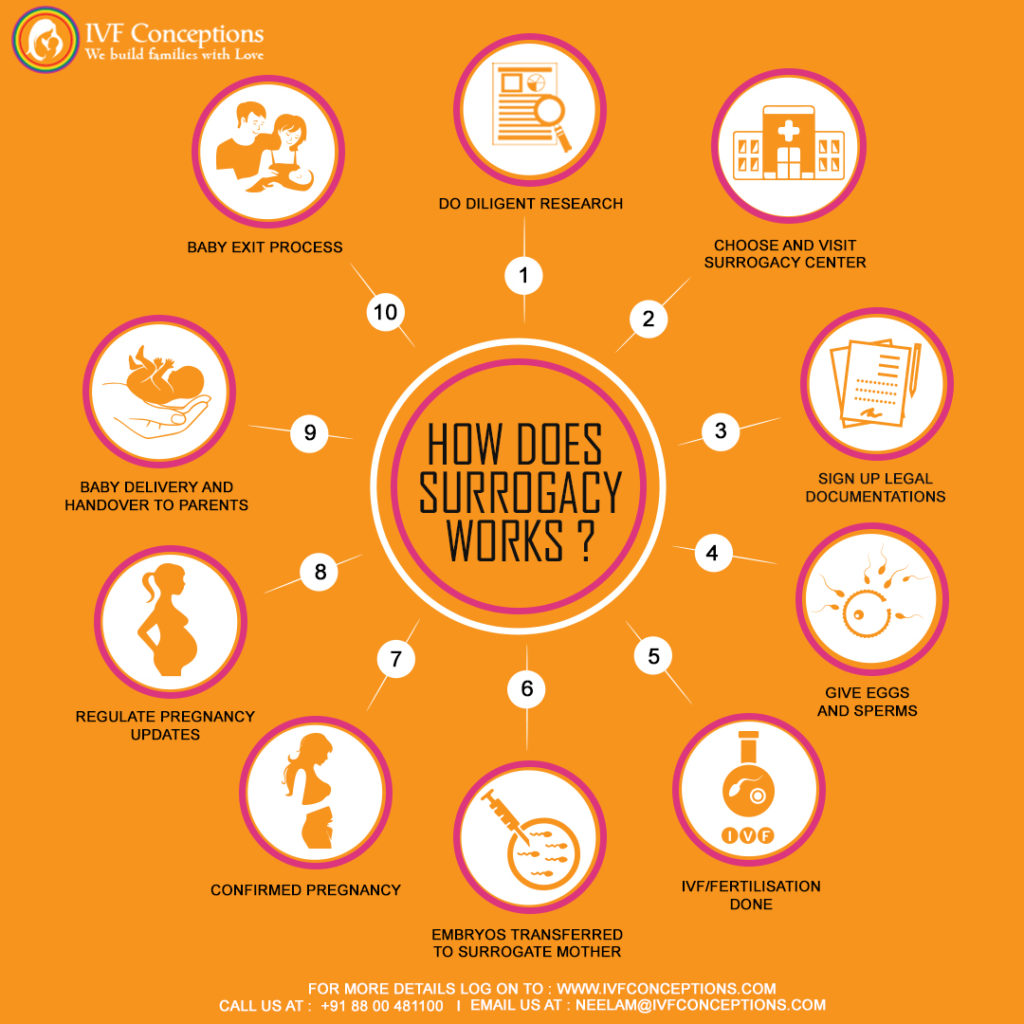
Step #1. Contact us and let us know what your specific requirement is
As soon as we hear from you and understand your exact requirements, we will suggest the program most suitable for you. We will request that you provide as much information as possible, such as your age, marital status, medical complications if any, citizenship, etc.
This will help us to understand and get back to you with specific details pertaining to your program. We will be sharing with you general information about your program and price list, with the breakdown of cost for your specific case. If you agree to proceed, we will be assisting you further.
Step #2. Selecting an Egg Donor/Surrogate Mother
In case you need an egg donor for your program, you can access the donor database and choose the egg donor of your choice. Your case manager will help you match the donor profile for you. You can choose a local donor or a Caucasian donor from our partner agency.
Step #3. Screening Tests
We will provide you with a list of tests to confirm your eligibility medically. You can do these tests in your city and send a scanned copy for review by a fertility specialist. Please note that in case, you are using an egg donor and surrogate mother, only male partners need to do Pre-IVF tests.
If you are self-cycling, then both partners will be asked to complete tests. These may include hormone level tests for self-cycles, scans for ED IVF cycles, blood types, infectious disease screens, and semen analysis.
Step #4. Sign Contracts
One of the essential requirements of the surrogacy program is to complete paperwork to ensure your rights and the surrogate’s rights. To save time and money, the agency/lawyer can make your specific Surrogacy Contract and email/fax/courier it for your signature.
Once reviewed and signed, you can bring a signed copy with you while traveling for the IVF cycle. Please note that in case you are using an egg donor, you also need to sign a separate Egg Donor Contract.
Step #5. First payment
Once contracts are signed, the Intended Parents are required to make the first payment as per your specific price list. It is advised to discuss the price and cost breakdown in advance with your case manager.
Step #6. Preparation and synchronization
As soon as we receive the first payment, tests, and preparation/synchronization of your cycle with the donor or that of your egg donor with the surrogate begin.
Generally, it takes 6 weeks to complete synchronization and start the stimulation protocol. If you are self-cycling, then you will receive clear instructions to start fertility medication, and an elaborate schedule will be provided to you before coming for egg pick-up.
Step #7. IVF and Pregnancy Tests
Once you visit a surrogacy country, you will meet the local team, doctor, donor, and surrogate. IVF specialists will discuss your program with you, along with the date of egg pick-up.
IVF is done, and embryos are implanted in your surrogate mother’s uterus; she will be kept on luteal support for 2 weeks. A blood test is done after 2 weeks to confirm pregnancy. Once pregnancy is confirmed and the gestational sac and heartbeat are seen, you will be getting regular updates on the surrogacy progress.
Step #8. Surrogate Pregnancy Care
Throughout her pregnancy, the surrogate is closely monitored by our IVF team. Her routine blood tests and scans, and check-ups will be shared with you. If you wish, you can also have a Skype meeting with a surrogate mother. The Surrogate receives monthly compensation, and the doctor closely monitors her progress in the coming months.
Step #9. Baby Birth
The estimated date of delivery is discussed with you so that you are present at the time of delivery. In case the surrogate goes into premature labor, you will be notified, and if a Cesarean is necessary, it will be discussed with you. Once the baby is born, the baby’s birth certificate is given, which will further initiate the process of applying for a baby passport and subsequent baby exit.
Step #10. Baby Exit Process
Once you receive a baby’s birth certificate, our surrogacy lawyer will guide and assist you with documents for the baby’s citizenship. Most countries do ask for DNA Tests for citizenship; in this case, you can pre-order the DNA kit before the baby’s birth.
Once citizenship is gained, you can apply for a baby passport and an exit visa. The taking baby home process varies from country to country; our surrogacy legal team will be helping you with your country-specific protocol.
More resources:
Advantages of Surrogacy In the USA
5 Things To Know Before Going For Surrogacy Process
Are intended parents also screened for surrogacy?
Is Surrogacy in India For Overseas Citizenship of India (OCI) Allowed?
Legal Issues Related To Surrogacy In India

Now, let’s start the Gestational Surrogacy Process With Us!
If you’d like to learn more about IVF, Egg Donation, or surrogacy services globally, check out the rest of our website at IVF Conceptions. We offer legally secure and affordable surrogacy consulting services for FREE. Start the Gestational Surrogacy Process with us as we make parenthood possible for all!
Get in touch for FREE SURROGACY CONSULTING:
Mobile: +91-8800481100 ( WhatsApp, Line, Viber)
Email: neelam@ivfconceptions.com
Our team has over 15 years of experience facilitating surrogacy arrangements, egg donation, and serving as an advocacy resource for infertile couples and LGBTQ individuals seeking to build families.