
Surrogacy Services in Mexico for International Intended Parents
Surrogacy services in Mexico, international surrogacy in Mexico, and Mexico surrogacy programs for foreign intended parents have attracted growing attention from couples and individuals exploring affordable cross-border surrogacy options in Latin America. Mexico offers modern fertility clinics, experienced IVF specialists, and programs designed to support international patients throughout the surrogacy journey.
One of the reasons intended parents consider surrogacy in Mexico for foreigners is the availability of full-service programs that include IVF treatment, egg donor programs, surrogate mother matching, pregnancy monitoring, and legal coordination after the birth of the baby. Several fertility centers in cities such as Mexico City, Cancún, and Guadalajara provide fertility services for international patients and offer support in English and Spanish.
However, it is important to understand that surrogacy laws in Mexico are not uniform nationwide. Instead, regulations vary by state, and intended parents typically work with experienced legal teams to complete the process in jurisdictions where surrogacy arrangements are permitted.
Many agencies and clinics therefore provide structured surrogacy programs that combine medical treatment, surrogate screening, and legal support to help intended parents navigate the process safely.
Surrogacy Services in Mexico – Quick Overview
| Service Component | What It Includes |
| Fertility Consultation | Medical assessment, fertility testing, treatment planning |
| IVF & Embryo Creation | Egg retrieval, fertilization, embryo culture and transfer |
| Egg Donor Programs | Donor matching and IVF with donor eggs if needed |
| Surrogate Mother Matching | Screening, medical evaluation, and matching with a surrogate |
| Pregnancy Monitoring | Prenatal care, ultrasounds, medications and medical supervision |
| Legal & Documentation Support | Surrogacy agreement, court process, birth certificate guidance |
| Birth & Newborn Assistance | Hospital delivery coordination and newborn documentation |
These services help ensure that the international surrogacy journey in Mexico is medically supported and legally structured from embryo transfer through the birth of the baby.
Because surrogacy laws vary by state and the legal process can differ for international parents, it is essential for intended parents to work with experienced fertility clinics and legal advisors who understand the local regulations and can guide them throughout the journey.
More resources for Mexico Surrogacy:
Gay Surrogacy in Mexico- A Comprehensive Guide for IPs in 2026
What is Surrogacy Cost in Mexico- Your Comprehensive Guide in 2026
Single Parents Surrogacy in Mexico
How to Find a Surrogate Mother in Mexico
📞 Get in Touch for a Free Surrogacy Consultation
📱 +91-8800481100 (WhatsApp | LINE | Viber)
📧 neelam@ivfconceptions.com
🌐 www.ivfconceptions.com
Why Intended Parents Choose us for a Safe, Smooth & Successful Surrogacy Journey:
🌍 Access to multiple surrogacy destinations with 15+ years of international experience
🏥 Partnerships with top-tier fertility clinics and agencies, backed by references from past clients
👩🦱 Diverse egg donor options: Asian, Caucasian, African, Oriental, and more
💸 Transparent and affordable pricing—direct payments with no extra agency fees
🔒 No hidden costs—all charges are agreed upon upfront
🤝 Dedicated case manager for personalized support
📲 Fast, honest, and clear communication throughout
📑 Full legal support for visas, documentation, and baby exit processes
🚚 Assistance with frozen sperm/embryo shipment logistics
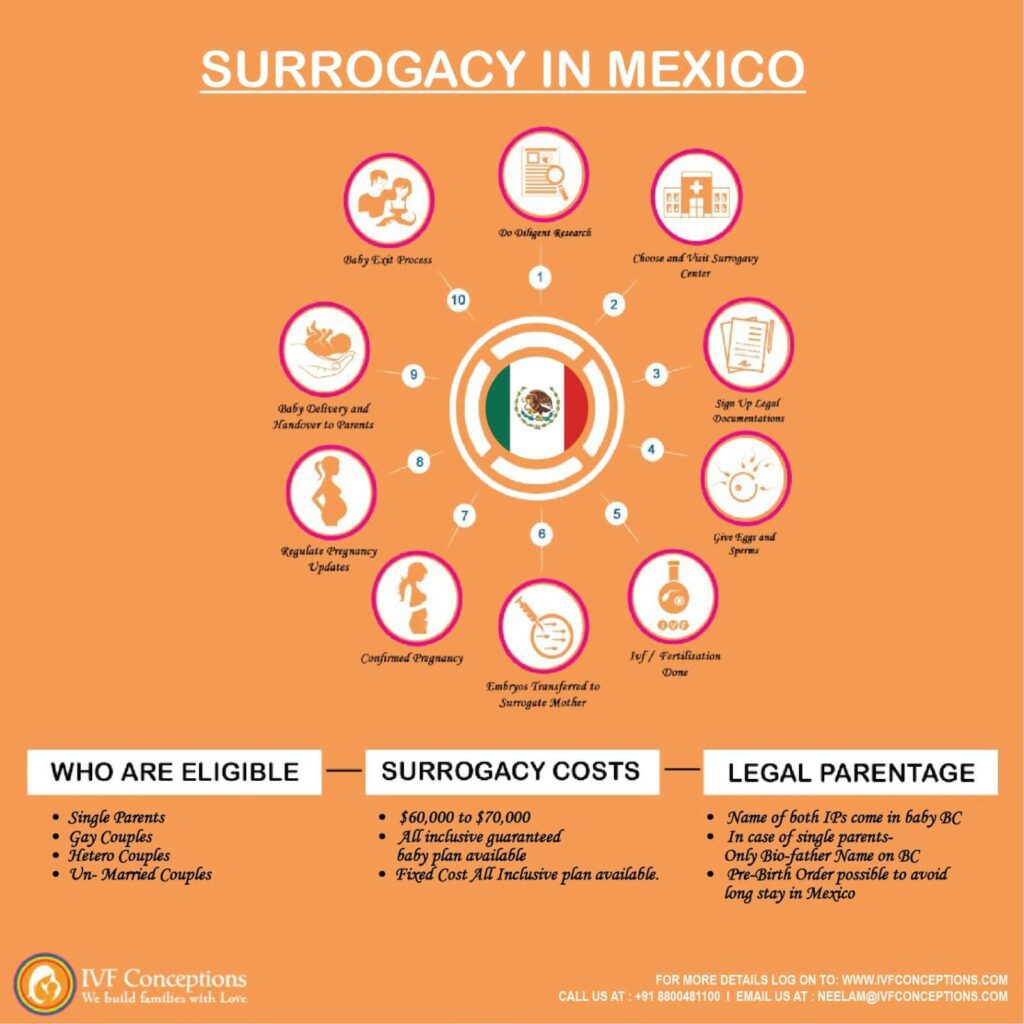 Surrogacy Services in Mexico
Why Surrogacy in Mexico?
Mexico has become a sought-after destination for surrogacy for compelling reasons. The country offers a unique combination of factors that attract intended parents from across the globe. Understanding these advantages helps you see why so many families choose Mexico for their surrogacy journey.
Experienced Medical Care
Mexico boasts world-class fertility clinics with internationally trained specialists. Many doctors completed training in the United States or Europe. Advanced medical facilities in Mexico City, Guadalajara, and Cancun offer cutting-edge reproductive technology. The quality of care matches or exceeds standards in other countries.
Cost Advantages
Surrogacy costs in Mexico typically range from $50,000 to $70,000. This represents significant savings compared to United States programs that often exceed $120,000. The lower cost doesn’t mean compromised quality. Affordable medical care, living expenses, and agency fees make Mexico accessible to more families.
Geographic Proximity
For American and Canadian intended parents, Mexico offers convenient travel access. Short flights mean you can visit your surrogate regularly during pregnancy. The time zone similarity makes communication easier. This proximity also simplifies the process of bringing your baby home after birth.
Discover If Mexico Is Right for Your Family
Every family’s surrogacy journey is unique. Our experienced consultants will help you understand how Mexico’s surrogacy options align with your specific needs, timeline, and budget. Schedule your free, confidential consultation today.
Our other surrogacy Country pages :
https://www.ivfconceptions.com/surrogacy-in-india/
https://www.ivfconceptions.com/surrogacy-in-ukraine/
https://www.ivfconceptions.com/surrogacy-in-georgia/
https://www.ivfconceptions.com/surrogacy-in-mexico/
https://www.ivfconceptions.com/surrogacy-in-usa/
https://www.ivfconceptions.com/surrogacy-in-colombia/
http://www.completesurrogacy.com
Is Surrogacy Legal in Mexico?
Yes, surrogacy is legal for all family types. Unlike countries with uniform national laws, Mexico’s surrogacy regulations vary by state. This creates both opportunities and challenges for intended parents. Understanding the current legal environment is crucial for a successful surrogacy journey.
Surrogacy itself is not illegal at the federal level in Mexico. However, specific regulations exist only in certain states. Some states have clear legal frameworks supporting surrogacy. Others remain silent on the issue. A few states have restricted or banned commercial surrogacy arrangements. This state-by-state variation requires careful planning and expert legal guidance.
Current Legal Status
As of 2024, Mexico allows surrogacy under specific conditions in several states. The legal situation evolved significantly after landmark Supreme Court rulings. These decisions established important precedents about parental rights and surrogacy agreements. Most surrogacy programs now operate in states with supportive legal frameworks.
The type of surrogacy matters legally. Altruistic surrogacy, where the surrogate receives only pregnancy-related expenses, faces fewer restrictions. Commercial surrogacy, involving compensation beyond expenses, has more limited legal recognition. Many programs structure arrangements to comply with local laws while ensuring fair compensation for surrogate mothers.
Who Can Pursue Surrogacy?
Eligibility for surrogacy in Mexico depends on the specific state and program. Married heterosexual couples generally have the clearest legal pathway. However, recent court decisions have expanded access. Same-sex couples and single parents can now pursue surrogacy in certain jurisdictions, though legal processes may differ.

International intended parents face additional considerations. Mexican law must recognize your parental rights, but you also need to consider your home country’s laws. Some countries readily accept surrogacy arrangements made abroad. Others present challenges. Working with legal experts familiar with both Mexican law and international family law proves essential.
Overview of Current Surrogacy Laws
Mexico’s surrogacy legal framework has undergone significant evolution over the past decade. Understanding these laws helps you navigate the process with confidence. The current system balances protecting all parties while enabling families to pursue surrogacy arrangements.
Legal Protections in Place
- Written surrogacy agreements legally recognized
- Intended parents’ names on birth certificates in supportive states
- Court precedents protecting parental rights
- Screening requirements for surrogate mothers
- Medical standards for fertility clinics
- Protections against surrogate mothers claiming custody
Legal Considerations
- State-by-state variation in regulations
- Some states restrict international surrogacy
- Commercial surrogacy limited in certain areas
- Marriage requirements in some jurisdictions
- Home country laws may affect recognition
- Post-birth legal processes required in some states

Regulatory Framework for Clinics and Agencies
Fertility clinics and surrogacy agencies operating in Mexico must comply with health regulations. The Federal Commission for Protection Against Health Risks (COFEPRIS) oversees medical facilities. This ensures clinics meet safety and quality standards. Agencies must operate transparently and ethically, though specific surrogacy agency regulations vary by state.
Egg donors and sperm donors undergo screening processes mandated by medical standards. These processes ensure genetic material meets health criteria. Records must be maintained according to privacy laws. Embryo creation, storage, and transfer follow established medical protocols.
Navigate Mexican Surrogacy Laws With Expert Legal Guidance
Surrogacy laws can seem overwhelming, but you don’t have to figure them out alone. Our legal team has extensive experience with Mexican surrogacy regulations and international family law. We’ll ensure your journey complies with all requirements and protects your parental rights. Contact us for a free legal consultation.
Mexican Surrogacy Laws State by State
Understanding state-specific regulations is critical for your surrogacy journey. Mexico’s federal system means each state establishes its own surrogacy laws. Some states have comprehensive legal frameworks. Others have no specific regulations. This section breaks down the legal landscape across key Mexican states.
Tabasco
Tabasco was historically one of the most surrogacy-friendly states in Mexico. The state civil code once explicitly permitted surrogacy arrangements. Many international surrogacy programs operated here for years. However, recent legislative changes have restricted access for international and unmarried intended parents. Current Tabasco law primarily allows surrogacy for married Mexican heterosexual couples.
Despite these restrictions, Tabasco’s legal precedents continue to influence surrogacy law nationwide. The state’s experience with surrogacy regulation provides valuable lessons. Some programs have relocated to other states with more accommodating frameworks.
Sinaloa
Sinaloa offers a favorable legal environment for surrogacy. The state recognizes surrogacy agreements and provides clear pathways to establish parental rights. Many surrogacy agencies now operate in Sinaloa due to its supportive legal framework. The state allows both national and international intended parents to pursue surrogacy.
Sinaloa law requires surrogacy agreements to be notarized and registered. The process for obtaining birth certificates listing intended parents is relatively straightforward. This legal clarity makes Sinaloa an attractive option for many families. Medical facilities in the state capital, Culiacán, provide quality care throughout the surrogacy process.
Mexico City
Mexico City presents a complex legal situation. While the city lacks specific surrogacy legislation, court rulings have established important precedents. Judges have granted parental rights to intended parents in surrogacy cases. The city’s advanced medical infrastructure and international connectivity make it appealing despite legal ambiguity.
Many fertility clinics in Mexico City have extensive experience with surrogacy arrangements. Legal experts in the city can navigate the judicial process for establishing parentage. However, the absence of explicit legislation means each case requires individual legal proceedings.
Querétaro
Querétaro has emerged as another state with supportive surrogacy regulations. The state’s civil code provisions facilitate surrogacy arrangements. Legal processes for parental recognition follow established procedures. Querétaro’s proximity to Mexico City provides access to major international airports while offering a more manageable legal environment.
The state requires proper legal documentation and medical oversight. Surrogate mothers must meet health and background requirements. Intended parents work through recognized agencies and legal representatives to ensure compliance with all regulations.
Other States
Several other Mexican states either have no specific surrogacy laws or have implemented restrictive policies. States like Coahuila and Nuevo León lack clear legal frameworks. This absence of regulation creates uncertainty. Some states have explicitly banned commercial surrogacy or limited surrogacy to residents only.
The legal landscape continues to evolve. Court decisions and legislative changes regularly update the surrogacy environment. Working with experienced agencies ensures you pursue surrogacy in states with appropriate legal protections. Your agency should have established relationships with legal experts familiar with current state regulations.
Important: Always verify current state laws before beginning your surrogacy journey. Legal landscapes can change, and what was permissible last year may have new restrictions today. Professional legal guidance specific to your situation is essential.
The Supreme Court Ruling on Surrogacy
Mexico’s Supreme Court has issued landmark decisions that fundamentally shaped surrogacy rights in the country. These rulings established constitutional protections for reproductive freedom and family formation. Understanding these decisions helps explain the current legal landscape and future trajectory of surrogacy law in Mexico.

Key Supreme Court Decisions
In several critical cases, the Supreme Court ruled that surrogacy constitutes a form of reproductive freedom protected by the Constitution. The court recognized the right of individuals to form families through assisted reproduction, including surrogacy arrangements. These decisions prevent states from imposing blanket bans on all surrogacy.
One significant ruling addressed discrimination against same-sex couples in surrogacy access. The court determined that limiting surrogacy to heterosexual married couples violated constitutional equality guarantees. This decision opened pathways for gay couples to pursue surrogacy, though implementation varies by state.
Another important decision concerned the establishment of parental rights. The court ruled that biological intended parents (those providing genetic material) have constitutional rights to be recognized as legal parents. This ruling strengthened the position of intended parents in surrogacy arrangements.
- Constitutional protection for reproductive freedom through surrogacy
- Recognition of diverse family structures, including same-sex couples
- Establishment of parental rights for genetically intended parents
- Prevention of discriminatory surrogacy restrictions
- Requirement for proper legal frameworks protecting all parties
- Emphasis on informed consent and contractual protections
Despite these progressive rulings, implementation remains inconsistent across states. Some states have proactively updated their laws to align with Supreme Court principles. Others have maintained restrictive policies or failed to develop clear regulations. The gap between constitutional principles and practical implementation means intended parents must still navigate complex state-level processes.
Who Will Be the Legal Parents in Mexico?
Establishing legal parentage represents one of the most critical aspects of surrogacy. Understanding who will be recognized as your child’s legal parents determines your rights and affects your ability to bring your baby home. Mexican law approaches this question differently depending on your specific situation and location.
Genetic Connection and Legal Parentage
In most Mexican surrogacy arrangements, genetic intended parents become the legal parents. If you provide the egg or sperm used to create the embryo, Mexican law generally recognizes your parental rights. This principle applies even when a surrogate carries and gives birth to the child. The genetic connection typically establishes your legal claim to parenthood.
When both intended parents contribute genetic material, both are usually recognized as legal parents. If you use an egg donor or sperm donor, the intended parent who provided genetic material plus their partner may both gain legal recognition, though processes vary. Some states allow pre-birth orders listing both intended parents on the birth certificate regardless of genetic contribution.
Birth Certificate Process
The birth certificate process differs by state and situation. In surrogacy-friendly states with clear laws, intended parents’ names can appear directly on the original birth certificate. This happens through pre-birth orders or immediate post-birth legal proceedings. The surrogate mother’s name never appears on the document.
Other states require initial birth certificates listing the surrogate mother, followed by legal proceedings to establish intended parents’ rights. This might involve adoption processes or parentage declarations. These procedures, while adding time, ultimately result in corrected birth certificates recognizing the intended parents.
Same-Sex Couples and Single Parents
Same-sex couples face specific considerations regarding legal parentage. The genetic parent (the one who provided sperm or egg) typically gains direct legal recognition. The non-genetic parent may need to complete additional legal steps, such as second-parent adoption. Recent court decisions have expanded recognition of both partners in same-sex couples, but processes remain more complex than for heterosexual married couples.
Single parents pursuing surrogacy generally receive legal recognition as the sole parent. Whether you’re a single man using an egg donor and surrogate, or a single woman using a sperm donor and surrogate, Mexican law recognizes your parental status. The process typically resembles that for the genetic intended parent in a couple.
Legal Documentation Required
Establishing legal parentage requires specific documentation. You’ll need the surrogacy agreement, proof of genetic relationship (medical records from IVF procedures), identification documents, and potentially marriage certificates. DNA testing may be required in some cases, particularly for international intended parents.
Your surrogacy agency and legal team handle much of this documentation process. They ensure all required papers are properly prepared, notarized, and submitted to relevant authorities. This legal support proves invaluable in navigating Mexican bureaucracy and court systems.
Pro Tip: Begin legal parentage processes as early as possible. Some steps can start during pregnancy, while others occur after birth. Early preparation prevents delays in bringing your baby home.
 Bringing Your Surrogacy Baby Home
 Bringing Your Surrogacy Baby Home
After your baby’s birth in Mexico, you’ll need to navigate immigration and citizenship processes to bring your child home. This journey varies significantly depending on your country of residence. Proper planning and documentation ensure a smooth transition for your growing family.
For United States Citizens
American intended parents follow U.S. immigration procedures to bring their baby home. If at least one parent is a U.S. citizen and has a genetic connection to the child, the baby typically qualifies for U.S. citizenship. You’ll need to apply for a Consular Report of Birth Abroad (CRBA) at the U.S. Embassy or Consulate in Mexico.
The CRBA application requires your baby’s Mexican birth certificate, proof of your U.S. citizenship, evidence of your genetic relationship to the child, and other supporting documents. Once approved, your baby receives U.S. citizenship and you can apply for a U.S. passport. This process typically takes several weeks, during which you’ll remain in Mexico.
Some situations require additional steps. If neither intended parent has a genetic connection to the child, immigration processes become more complex. You may need to pursue adoption procedures or apply for an immigrant visa for your child. Working with immigration attorneys experienced in surrogacy cases proves essential in these situations.
For Canadian Citizens
Canadian intended parents must apply for citizenship for their baby through Immigration, Refugees and Citizenship Canada. The process requires proof of Canadian citizenship for at least one parent, evidence of genetic relationship, the Mexican birth certificate, and the surrogacy agreement. Canada recognizes children born through surrogacy abroad, but documentation requirements are strict.
You’ll apply for a Canadian citizenship certificate and passport for your baby. Processing times vary, typically ranging from two to six weeks. During this period, you’ll remain in Mexico with your newborn. Many Canadian parents choose to stay near the Canadian Embassy in Mexico City to facilitate the process.
For Other Countries
Intended parents from other countries face varying requirements. Some nations readily accept surrogacy arrangements made abroad. Others present significant challenges or don’t recognize surrogacy at all. European countries particularly vary in their approach to international surrogacy.
Before beginning your surrogacy journey, research your home country’s laws regarding surrogacy abroad. Some countries require pre-approval or specific documentation. Others mandate adoption procedures after returning home. Understanding these requirements early prevents unpleasant surprises.
Timeline Considerations
Plan to stay in Mexico for at least two to six weeks after your baby’s birth. This time allows for medical recovery, legal processes, and documentation completion. Some parents stay longer to ensure smooth processing and enjoy bonding time with their newborn.
Budget for extended accommodations near your medical facility and the relevant embassy or consulate. Many surrogacy agencies assist with housing arrangements and local support during this period. Having family members join you can provide emotional support during the waiting period.

Understanding the Cost of Surrogacy in Mexico
| Cost Component | Estimated Range | What’s Included |
| Agency Fees | $8,000 – $12,000 | Coordination, matching, case management, support services |
| Surrogate Compensation | $15,000 – $20,000 | Base compensation, monthly allowance, maternity clothing |
| Medical Expenses | $12,000 – $18,000 | IVF, embryo transfer, prenatal care, delivery |
| Legal Fees | $5,000 – $8,000 | Contracts, parental rights, birth certificate process |
| Egg Donor (if needed) | $5,000 – $8,000 | Donor compensation, screening, retrieval costs |
| Insurance | $2,000 – $4,000 | Surrogate’s medical insurance, pregnancy complications coverage |
| Travel and Accommodation | $3,000 – $6,000 | Multiple trips, extended stay after birth |
Important: Always request itemized cost breakdowns in writing. Ensure you understand what’s included in quoted prices and what might incur additional charges. Hidden fees can significantly impact your budget.
Affordable Surrogacy in Mexico
Mexico’s cost advantages make surrogacy accessible to more families. Understanding why costs are lower helps you appreciate the value while ensuring you don’t sacrifice quality. Affordability in Mexican surrogacy stems from economic factors rather than compromised care or services.

Why Mexico Offers Lower Costs
Several factors contribute to Mexico’s cost-effectiveness. Lower living costs throughout Mexico mean surrogate mothers require less compensation to maintain comfortable lives during pregnancy. Medical professionals earn competitive salaries by Mexican standards while charging less than American counterparts. Facility overhead and operational costs remain significantly below United States levels.
The favorable exchange rate between U.S. dollars and Mexican pesos provides additional savings. When you pay in dollars, your money stretches further in the Mexican economy. This currency advantage benefits all aspects of your surrogacy journey from medical care to legal services.
| Country | Average Total Cost | Key Advantages | Considerations |
| Mexico | $50,000 – $70,000 | Proximity to US, quality care, evolving legal framework | State-by-state legal variation |
| United States | $120,000 – $200,000 | Clear legal framework, highest medical standards | Prohibitively expensive for many families |
| Canada | $80,000 – $120,000 | Regulated industry, altruistic model | Limited surrogate availability, longer wait times |
| Colombia | $60,000 – $80,000 | Growing programs, similar time zone | Less established legal framework |
| Ukraine (pre-2022) | $40,000 – $60,000 | Very affordable, established industry | Conflict has disrupted programs |
| Georgia | $50,000 – $70,000 | Clear legal framework, competitive pricing | Geographic distance for American/Canadian parents |
Mexico vs. Other International Destinations
Countries like Ukraine historically offered very low surrogacy costs, attracting international intended parents. However, political instability and conflict have disrupted these programs. Georgia provides clear legal frameworks and competitive pricing but requires longer travel for North American families.
Colombia has emerged as another Latin American option with growing surrogacy programs. Costs run slightly higher than Mexico at $60,000 to $80,000. Mexico’s advantage includes more established programs, greater geographic accessibility for U.S. families, and a longer track record in international surrogacy.
Mexico’s Cost Advantages
- 40-60% savings compared to United States
- Similar or better value than Canada
- More established than newer Latin American programs
- No hidden fees with transparent agencies
- Short travel distances reduce trip expenses
- Quality care without premium pricing
Cost Considerations
- Still requires significant financial investment
- Currency fluctuations can affect planning
- Legal processes may add unexpected costs
- Extended stay expenses after birth
- Potential need for multiple embryo transfers
- Travel costs for multiple trips
When evaluating cost-effectiveness, consider the total value package rather than price alone. Mexico offers an attractive balance of affordability, quality medical care, reasonable legal processes, and geographic convenience. This combination makes it one of the most cost-effective surrogacy destinations for North American intended parents.
Get a Personalized Surrogacy Expense in Mexico
Every family’s surrogacy journey is unique, and costs vary based on your specific needs. We provide detailed, transparent cost breakdowns with no hidden fees or surprises. Our team will help you understand all expenses and develop a financial plan that works for your situation. Contact us today for your free, personalized cost consultation.
Gay Surrogacy in Mexico
Same-sex couples’ surrogacy in Mexico is possible with the current legal status in Mexico. Recent legal developments and growing social acceptance have expanded opportunities, though challenges remain.

Legal Status for Same-Sex Couples
Mexico’s Supreme Court rulings have established that restricting surrogacy to heterosexual couples violates constitutional equality protections. This legal precedent means same-sex couples have the right to pursue surrogacy. However, implementation varies by state. Some states explicitly welcome LGBTQ+ intended parents. Others maintain restrictive policies despite Supreme Court guidance.
Surrogacy agencies specializing in gay surrogacy know which states offer the most supportive legal environments. These experts navigate local regulations to protect your parental rights. Working with experienced professionals familiar with LGBTQ+ surrogacy ensures your journey proceeds smoothly despite varying state attitudes.
Costs of Surrogacy in Mexico for Gay Couples
Gay male couples typically face higher costs than heterosexual couples or single women because they need an egg donor in addition to a surrogate. Expect to add $5,000 to $8,000 to standard surrogacy costs for egg donation services. This includes donor compensation, screening, retrieval procedures, and coordination.
Despite these additional expenses, Mexico remains significantly more affordable than the United States gay surrogacy programs. American programs for same-sex couples frequently exceed $150,000. Mexico’s $60,000 to $80,000 total costs (including egg donation) provide substantial savings while maintaining quality care and support.
- Supreme Court protections for LGBTQ+ surrogacy rights
- A growing number of gay-friendly agencies and clinics
- Experienced legal teams familiar with same-sex parentage
- Surrogate mothers open to working with gay couples
- Cost savings compared to United States programs
- Supportive community of LGBTQ+ parents who’ve completed journeys
Single-Parent Surrogacy in Mexico
Single individuals choosing surrogacy to build their families deserve the same support and opportunities as couples. Mexico welcomes single parents pursuing surrogacy, offering pathways to parenthood for both men and women. Understanding the specific considerations for solo surrogacy journeys helps you plan effectively.
Start Your Surrogacy Journey With Expert Support
Contact us today to schedule your free, confidential consultation and take the first step toward your dream of parenthood.