
Commercial and Legal Surrogacy Countires- Your Surrogacy Guide

Did you know commercial surrogacy is banned in all 27 EU countries and some other countries like Canada, the UK, Australia, and even India? This fact shows how big of a deal surrogacy laws are around the world. It’s key for parents-to-be to know these laws since they change a lot from country to country.
There are a few countries where commercial surrogacy is legal and happens under certain rules. These places offer a big chance for those wanting to have a child through gestational surrogacy.
Exploring this topic, we see some countries support both commercial and altruistic surrogacy. Others have strict rules or ban it completely. This guide will show you countries where commercial surrogacy is allowed and the key differences. These are important for making smart choices about surrogacy.
Key Takeaways for Commercial and Legal Surrogacy Countires
- Commercial surrogacy is banned in 27 EU countries.
- A few countries permit commercial surrogacy under specific laws, like the US, Georgia, and Ukraine.
- Understanding surrogacy regulations globally is essential for parents.
- Legal recognition of parents varies by jurisdiction.
- Surrogacy options may differ based on the country, so doing diligent research for the legal and best countries for surrogacy is a must before starting your surrogacy journey.
📞 Get in Touch for a Free Surrogacy Consultation
📱 +91-8800481100 (WhatsApp | LINE | Viber)
📧 neelam@ivfconceptions.com
🌐 www.ivfconceptions.com
Why Intended Parents Choose Complete Surrogacy for a Safe, Smooth & Successful Surrogacy Journey:
🌍 Access to multiple surrogacy destinations with 15+ years of international experience
🏥 Partnerships with top-tier fertility clinics and agencies, backed by references from past clients
👩🦱 Diverse egg donor options: Asian, Caucasian, African, Oriental, and more
💸 Transparent and affordable pricing—direct payments with no extra agency fees
🔒 No hidden costs—all charges are agreed upon upfront
🤝 Dedicated case manager for personalized support
📲 Fast, honest, and clear communication throughout
📑 Full legal support for visas, documentation, and baby exit processes
🚚 Assistance with frozen sperm/embryo shipment logistics
Surrogacy costs resources worldwide:
Top 4 cheapest countries for surrogacy
Best Countries for Surrogacy- Top International Destinations
Risks of international surrogacy
Global International Surrogacy Options
Surrogacy In Mexico-Everything Intended Parents Need To Know
Cheapest Country For Gay Surrogacy- Colombia
Low-cost surrogate mother in Argentina
Low-cost surrogate mother in Kazakhstan
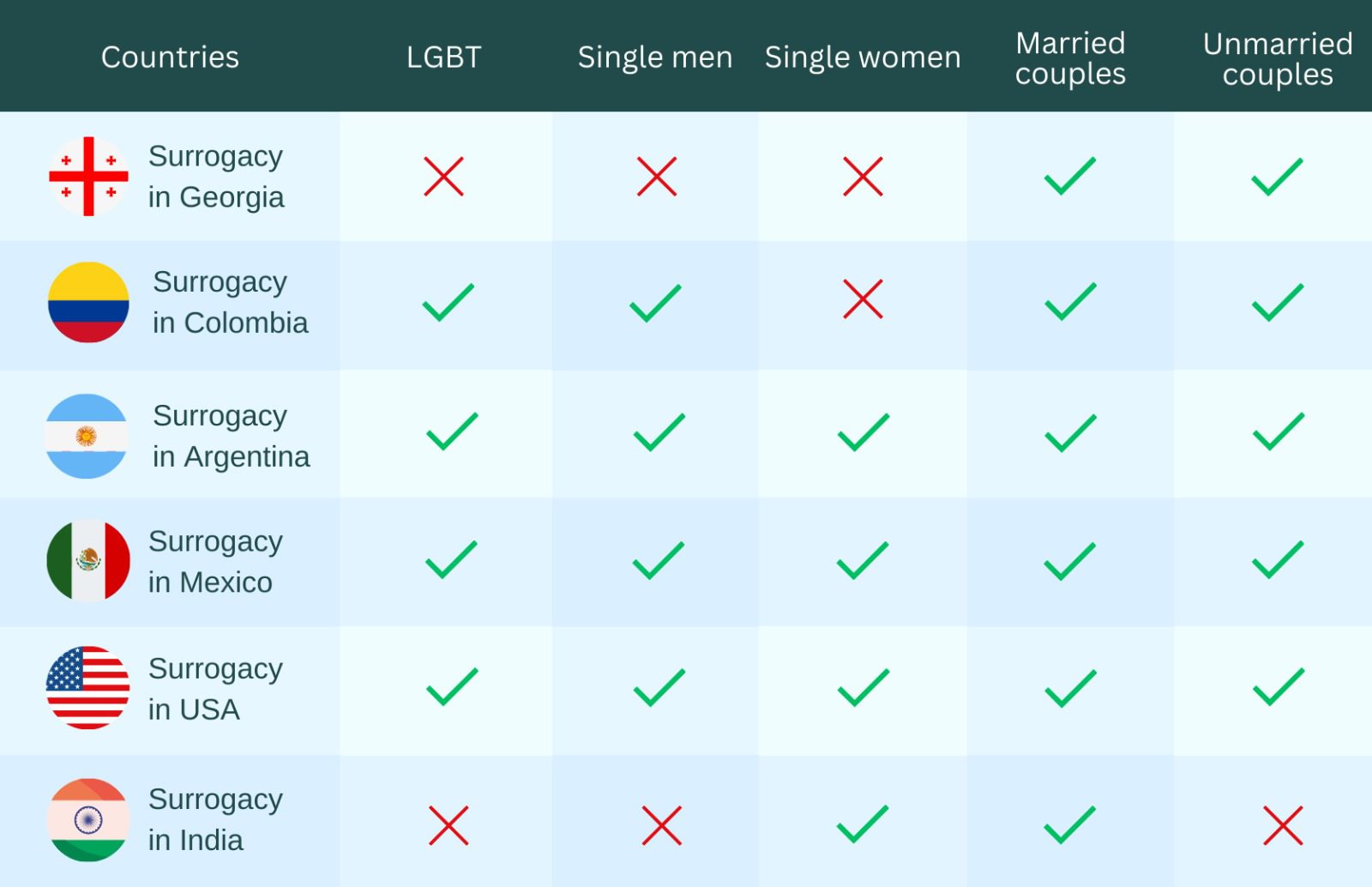
Countries Where Commercial Surrogacy is Legal
Introduction to Commercial Surrogacy
Commercial surrogacy offers hope to those facing infertility or reproductive challenges. It’s key to know the two main types: gestational and traditional surrogacy.
Gestational surrogacy means the surrogate carries a child made from the intended parents’ or donors’ eggs and sperm.
Traditional surrogacy, on the other hand, involves the surrogate using her own egg, creating a genetic link with the child. Both options help people achieve their dream of becoming parents.
The demand for commercial surrogacy is growing. This is especially true for women with uterine issues, single men, and same-sex couples. However, legal issues and complexities surround it. Many countries lack laws on commercial surrogacy, pushing people to look abroad for options.

Significance of Understanding Surrogacy Laws Worldwide
It’s key for intended parents and surrogates to know the surrogacy laws around the world. Each country has its own rules about commercial surrogacy. This knowledge is vital because it affects the legality of surrogacy contracts and the legal status of surrogacy in different places.
In some places, surrogacy contracts are legally binding. But in others, they might not be recognized. This makes it hard to establish parental rights after the baby is born. For example, in California, a 1993 case, Johnson v. Calvert, ruled that contracting parents can get custody of a child born through surrogacy. But in states like Michigan and New Jersey, surrogacy contracts face legal hurdles and could be declared invalid.
Knowing about international surrogacy laws also helps to understand the costs involved. For example, the total cost of surrogacy in the U.S. can be over $200,000. In contrast, it’s around $25,000 in countries like India. This big difference in cost can lead to exploitation, especially in poor countries.
Also, many places don’t have clear laws about the legal parentage and nationality of children born through surrogacy. This can leave children without a nationality. Countries like the U.K., Canada, and Australia only allow altruistic surrogacy. But France and Germany ban both commercial and altruistic surrogacy.
Being well-informed about surrogacy laws worldwide is crucial. It ensures ethical practices and protects the rights and interests of all involved. This knowledge is not just about following the law. It also helps create a caring environment for everyone involved.
Countries where commercial surrogacy is legal
Countries Where Commercial Surrogacy Is Legal (2025)
Commercial surrogacy, where the surrogate is financially compensated beyond medical and pregnancy-related expenses, is legal in a few countries. However, access is often limited to specific groups, such as heterosexual couples.
Here is an updated list of countries where commercial surrogacy is fully legal and regulated:
1. Ukraine
- Status: Previously a top surrogacy destination, but the ongoing war has affected services.
- Eligibility: Only heterosexual married couples can access surrogacy.
- Legal Framework: The surrogate has no parental rights, and the intended parents are listed on the birth certificate.
2. Georgia
- Status: A leading international surrogacy destination with well-regulated laws.
- Eligibility: Only available to heterosexual married couples.
- Legal Framework: The intended parents’ names appear directly on the birth certificate, ensuring legal parenthood.
3. USA (varies state-wise)
- Status: All surrogacy arrangements are allowed, but vary from state to state.
- Eligibility: Available to heterosexual married couples/ single parents/ gay couples
- Legal Framework: Foreigners are allowed/ state state-wise legal framework

Table: Commercial Surrogacy Laws by Country (2025)
| Country | Cost Estimate (USD) | Eligible Couples | Legal Status |
| Ukraine | $40,000 – $60,000 | Heterosexual married only | Strong legal framework, but affected by war |
| Georgia | $50,000 – $70,000 | Heterosexual married only | Well-regulated, no parental rights for surrogate |
| USA | $100,000 – $200,000 | All family types | Well-regulated |
Commercial surrogacy remains a controversial topic, with many countries restricting or outright banning the practice. While Ukraine and Georgia continue to be key destinations, Russia’s ban on foreign intended parents signals a shifting legal landscape. Intended parents should seek expert legal advice before proceeding with surrogacy in any country.
Overview of Legislation in Surrogacy-Friendly Countries
Places friendly to surrogacy have laws that protect everyone involved. In the U.S., states like California and Florida make it easier for commercial surrogacy. But New Jersey has strict rules that parents should know about.
In Ukraine, paid surrogacy is common and easy for outsiders. Georgia is also welcoming, with clear rules for commercial surrogacy. Iran and Cyprus are becoming popular, with laws that protect parents’ rights.
Comparison of Commercial Surrogacy Regulations
Surrogacy laws differ a lot around the world. Canada only allows altruistic surrogacy, where surrogates get back only their costs. But countries like Russia and Thailand allow commercial surrogacy.
This surrogacy regulation comparison shows why parents-to-be must do their homework. Laws affect everything from contracts to rights. Knowing these laws is crucial. Here’s a table with key facts about commercial surrogacy laws:
| Country | Commercial Surrogacy Status | Key Regulations |
| United States | Legal in some states | Varies by state |
| Canada | Altruistic only | Commercial surrogacy banned |
| Ukraine | Legal and accessible | Welcoming regulations for foreign parents |
| Georgia | Legal and popular | Pro-commercial surrogacy laws |
| Cyprus | Legal | Supports intended parents’ rights |
| India | Altruistic for locals | Commercial surrogacy banned for foreigners |

Pros and Cons of Commercial Surrogacy
Commercial surrogacy is a complex topic with both benefits and ethical concerns. It can open new doors for building families for intended parents. But it also raises important issues that need careful thought. Knowing both sides helps people make better choices for their families.
Benefits for Intended Parents
Commercial surrogacy offers many advantages for those wanting to grow their families. Key benefits include:
- Legal Recognition: Many places have laws that make it easier to get custody and recognition.
- Access to Quality Care: Surrogates and babies get the best health care in top medical facilities.
- Tailored Arrangements: Intended parents can make custom contracts that fit their family plans.
Ethical Concerns and Risks
Even with its benefits, commercial surrogacy has serious ethical issues:
- Exploitation of Vulnerable Women: Poor women might be pressured by money to become surrogates, even if they don’t want to.
- Commodification of Children: Seeing children as products can harm society’s view of them.
- Surrogacy Risks: Surrogates face big health and emotional risks, like medical problems and emotional pain from giving up a child.
It’s key for intended parents to really get these ethics and risks before starting. This ensures a caring and responsible path for everyone involved.
| Benefits | Ethical Concerns |
| Legal recognition of parental rights | Exploitation of vulnerable women |
| Access to quality medical care | Commodification perceptions |
| Flexible contractual arrangements | Health risks to surrogates |
Additional guide for International Surrogacy Countries.
https://www.ivfconceptions.com/surrogacy-in-india/
https://www.ivfconceptions.com/surrogacy-in-ukraine/
https://www.ivfconceptions.com/surrogacy-in-georgia/
https://www.ivfconceptions.com/surrogacy-in-mexico/
https://www.ivfconceptions.com/surrogacy-in-usa/
https://www.ivfconceptions.com/surrogacy-in-colombia/
https://www.ivfconceptions.com/surrogacy-in-laos/
https://www.ivfconceptions.com/surrogacy-in-uk/
https://www.ivfconceptions.com/surrogacy-in-canada/
https://www.ivfconceptions.com/surrogacy-in-kazakhstan-for-intended-parents/
https://www.ivfconceptions.com/surrogacy-in-armenia-process-legal-and-surrogacy-cost-in-armenia/
https://www.ivfconceptions.com/surrogacy-in-argentina-an-comprehensive-guide/
Alternative Legal Surrogacy Countries – Altruistic Surrogacy Countries
Exploring legal surrogacy options is key for those wanting to build families through kindness. Countries that allow altruistic surrogacy offer unique chances and challenges.
We’ll look at Mexico, Colombia, Argentina, and Canada as notable places for altruistic surrogacy.
Surrogacy in Mexico
In Mexico, altruistic surrogacy is the main focus, where surrogates get paid mostly for their costs. This makes surrogacy costs in Mexico range from $65,000 to $90,000, depending on the clinic. Surrogacy law in Mexico varies by state, with places like Tabasco and Sinaloa being more welcoming to foreign parents.

Surrogacy in Colombia
Colombia has issues with its surrogacy laws. Even though surrogacy in Colombia is allowed, there are big legal problems. Getting legal recognition for a child can be hard, often requiring overcoming big legal hurdles. This makes the costs of surrogacy in Colombia unpredictable, adding stress for those trying to navigate this complex situation.
Surrogacy in Argentina
Argentina supports altruistic surrogacy, but with strict rules. Surrogates can only get paid for their expenses. This creates both opportunities and challenges. While legal surrogacy in Argentina is possible, the lack of commercial options can make surrogacy costs in Argentina higher.
Surrogacy in Canada
Canada only allows altruistic surrogacy, where surrogates get paid only for their costs. The Canadian surrogacy laws help intended parents get legal custody of their children. But the strict rules can make surrogacy costs in Canada high, requiring careful planning and legal advice.
| Country | Type of Surrogacy | Legal Framework | Costs |
| Mexico | Altruistic | Varies by state | $35,000 – $60,000 |
| Colombia | Altruistic (Ambiguous) | Undefined regulations | Variable |
| Argentina | Altruistic | Expense reimbursement only | Higher costs |
| Canada | Altruistic | Strictly regulated | Relatively high |
Best Countries for Gay Surrogacy
Looking into gay surrogacy means finding places with laws that welcome LGBTQ+ families. Many surrogacy countries for gay couples offer different ways to build a family.
It’s key to know the laws around surrogacy regulations for LGBTQ+ people, especially for single parents.

Best Countries for Gay Surrogacy
Countries with few rules are special for gay surrogacy. Here are some examples:
| Country | Legal Status | Cost | Notes |
| United States | Commercial Surrogacy Allowed | $90,000 – $140,000 | Success rates approach 80%; regulated clinics are available. |
| Mexico | Commercial Surrogacy Recognized | $60,000 to $90,000 | Supreme Court ruling protects surrogacy for LGBT individuals. |
| Colombia | Legal & Constitutional | $60,000 to $80,000 | Recognizes surrogacy rights for LGBT. |
| Kenya | Commercial Surrogacy Allowed | $50,000 to $60,000 | Not legally regulated, somewhat grey area |
| Ghana | Commercial Surrogacy Allowed | Varie $50,000 to $60,000 | Accessible legal processes |
These surrogacy options for single parents open doors for building families. It’s important to do your homework on each place’s laws and rules.
International Surrogacy Cost Comparison
The cost of international surrogacy varies a lot based on the country and the specific plans. Knowing these differences helps intended parents make better choices. Here’s a look at the average costs in different places:
| Country | Average Cost | Notes |
| United States | $145,000 | Range: $130,000 – $160,000; includes surrogate compensation, agency fees, and IVF costs. |
| Canada | $85,000 | Known for a supportive legal framework for surrogacy. |
| Mexico | $82,000 | Offers relatively affordable surrogacy pricing. |
| Ukraine | $55,000 | Minimum price of $35,000; favorable pricing attracts many. |
| Colombia | $67,000 | Only altruistic surrogacy arrangements are allowed. |
| Greece | $85,000 | Increasingly popular due to favorable legal conditions. |
| Iran | $12,000 – $20,000 | The cheapest option worldwide, with significantly low overall costs. |
| Georgia | $32,000 – $60,000 | Competitive rates with all-inclusive packages offered. |
| India | $25,000 – $30,000 | Includes base payment for surrogates and IVF costs. |
| Thailand | $55,000 – $65,000 | Historically known for affordability but now navigating legal challenges. |
Each location offers a different view on surrogacy costs. For those looking to save money, it’s key to understand all the costs. This includes what the surrogate gets paid, agency fees, and legal expenses. This comparison shows the range of prices and what each place offers.
Conclusion for Commercial and Legal Surrogacy Countires
Understanding commercial surrogacy is complex and requires careful thought. This guide has shown how laws, costs, and ethics differ around the world. Countries like the United States, Ukraine, and India have unique rules. Intended parents need to know these to make good choices that fit their values and the law.
Parents-to-be should keep up with changes in surrogacy laws and ethics. This helps ensure a positive experience. Knowing the rights and protections of everyone involved can also reduce risks.
Being well-informed helps parents, surrogate mothers, and the children they carry. It builds a fair surrogacy system. This is key for creating a strong foundation in family building.
📞 Get in Touch for a Free Surrogacy Consultation
📱 +91-8800481100 (WhatsApp | LINE | Viber)
📧 neelam@ivfconceptions.com
🌐 www.ivfconceptions.com
Why Intended Parents Choose Complete Surrogacy for a Safe, Smooth & Successful Surrogacy Journey:
🌍 Access to multiple surrogacy destinations with 15+ years of international experience
🏥 Partnerships with top-tier fertility clinics and agencies, backed by references from past clients
👩🦱 Diverse egg donor options: Asian, Caucasian, African, Oriental, and more
💸 Transparent and affordable pricing—direct payments with no extra agency fees
🔒 No hidden costs—all charges are agreed upon upfront
🤝 Dedicated case manager for personalized support
📲 Fast, honest, and clear communication throughout
📑 Full legal support for visas, documentation, and baby exit processes
🚚 Assistance with frozen sperm/embryo shipment logistics
FAQs for legal commercial surrogacy countries

What countries allow commercial surrogacy?
Countries like the United States, Georgia, Ukraine, and parts of Mexico allow commercial surrogacy. It’s important to know the specific rules in each place.
What is the difference between gestational and traditional surrogacy?
Gestational surrogacy means the surrogate carries a child not genetically related to her. This uses an egg from the intended mother or a donor. Traditional surrogacy, on the other hand, uses the surrogate’s own egg, making her genetically linked to the child.
Are surrogacy agreements legally enforceable?
Whether surrogacy agreements are enforceable varies by country. In some places, they are legal, while others might not recognize them. This can make claiming legal parenthood tricky.
What are the costs associated with surrogacy in different countries?
Surrogacy costs differ a lot. In the U.S., it’s around $100,000. But countries like Ukraine and Georgia are cheaper, with costs ranging from $40,000 to $65,000 and $30,000 to $60,000, respectively.
Are there ethical concerns with commercial surrogacy?
Yes, there are ethical worries. These include the risk of exploiting vulnerable women, treating children as commodities, and health dangers for surrogates during and after pregnancy.
How does international surrogacy impact LGBTQ+ couples?
Many countries offer legal options for LGBTQ+ couples to pursue surrogacy. But, the rules vary, and it’s key for them to check the legal status in their chosen country.
Can surrogacy in Canada be pursued legally?
Canada allows altruistic surrogacy, where surrogates can only get back expenses, not payment. Intended parents face a detailed legal process.
What should intended parents consider when choosing a surrogacy destination?
Intended parents should look at the legal setup, ethical issues, costs, and if they can legally be recognized as parents in their chosen country.
What are the risks involved in surrogacy?
Risks include emotional and physical health problems for surrogates, legal battles over who the parents are, and ethical concerns about exploitation and treating children as goods.
Are there any countries with restrictions on commercial surrogacy?
Yes, countries like the UK and Canada only allow altruistic surrogacy. This means surrogates can only get back related expenses, adding legal hurdles for intended parents.
Source Links
- https://en.wikipedia.org/wiki/Surrogacy_laws_by_country – Surrogacy laws by country
- https://pubmed.ncbi.nlm.nih.gov/36580941/ – Commercial Surrogacy: An Overview – PubMed
- https://www.theregreview.org/2024/03/02/international-approaches-to-surrogacy-regulation/ – International Approaches to Surrogacy Regulation | The Regulatory Review