
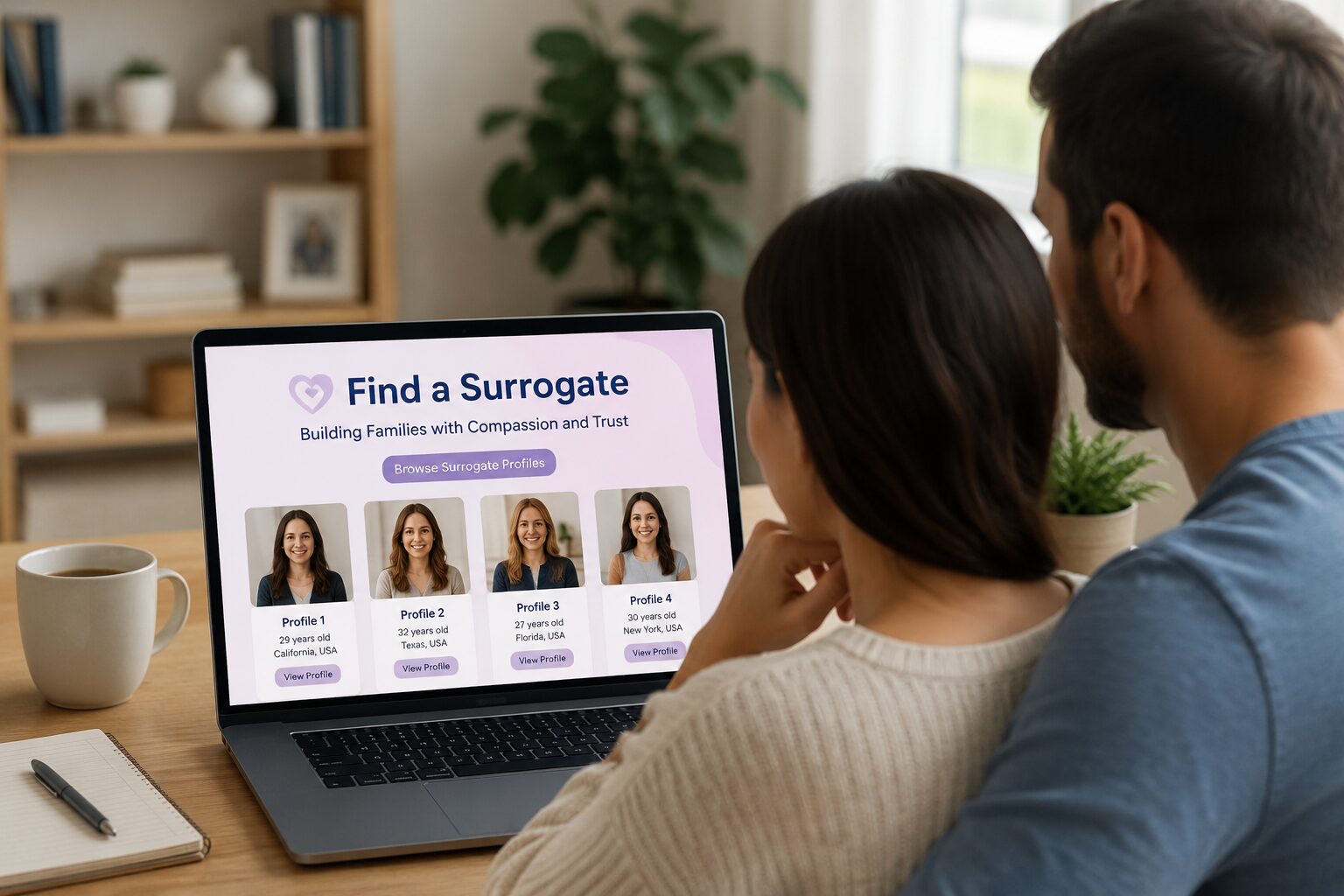
Finding a potential surrogate online can make the first stage of a surrogacy journey feel more accessible. Intended parents can explore profiles, consider different locations and make direct contact with people who may be interested in helping them build their family.
However, an online profile should always be treated as an introduction—not as confirmation that someone is medically, legally or emotionally ready to become a surrogate.
A promising profile can help you decide whom you would like to contact. The more important work begins afterwards: getting to know one another, verifying information, discussing expectations and involving the appropriate medical and legal professionals.
Here is what intended parents should consider before sending that first message.
Understand what an online matching platform does
An online surrogacy matching platform helps intended parents and prospective surrogates discover and communicate with one another.
It can be particularly helpful for intended parents considering an independent or partially independent surrogacy journey, as it provides a way to begin making connections without relying entirely on personal introductions.
For example, intended parents can use SurrogateFinder.com to browse surrogate profiles by country and location and make direct initial contact with members who appear compatible.
However, a matching platform is not the same as a surrogacy agency, fertility clinic or legal service.
Its role is to facilitate the initial connection. It does not replace professional identity checks, medical screening, psychological assessment, legal advice or the fertility clinic’s approval process.
Recognizing this distinction from the beginning can help intended parents use online profiles effectively without placing too much confidence in information that has not yet been independently verified.
Check the legal pathway before beginning your search
Before investing emotionally or financially in a potential match, intended parents should establish whether the proposed surrogacy pathway is legally possible.
- Where the intended parents live
- Where the surrogate lives
- Where fertility treatment will take place
- Where the child will be born
- The intended parents’ marital status
- Whether donor eggs or sperm will be used
- How legal parenthood will be established after birth
The fact that someone is available and willing to become a surrogate does not mean an arrangement can legally proceed in her country or be recognized in the intended parents’ home country.
This is particularly important in international surrogacy. Cross-border arrangements may raise additional questions concerning legal parenthood, birth registration, citizenship, immigration and travel documents.
Intended parents should consult an appropriately qualified reproductive lawyer before making commitments. Where more than one country or state is involved, advice may be required in each relevant jurisdiction.
Look for a complete and thoughtful profile
A useful profile should provide enough information to help intended parents decide whether an initial conversation may be worthwhile.
It does not need to disclose highly private medical information publicly. However, it should normally give some indication of the person’s circumstances, motivation and expectations.
- Age and general location
- Relationship and family circumstances
- Previous pregnancy experience
- Reasons for considering surrogacy
- Willingness or ability to travel
- Preferred communication style
- Approximate availability or timeline
- Whether close family members are supportive
- The type of intended parents she is comfortable helping
- Any major preferences concerning the journey
Pay attention to how the information is expressed, not only to whether certain boxes have been completed.
A thoughtful profile often gives a clearer sense of the person behind it. A very brief profile is not automatically suspicious, but it may mean that considerably more information needs to be established before deciding whether to proceed.
Look for consistency rather than perfection
Online profiles are written by individuals, not professional copywriters. Grammar, spelling or limited detail should not automatically determine whether someone is genuine or suitable.
Consistency matters more.
Consider whether the person’s age, location, family circumstances, pregnancy history and proposed timeline appear to fit together.
If the profile says one thing but initial messages say something substantially different, ask for clarification rather than ignoring the inconsistency.
Sometimes there will be a straightforward explanation. People move home, circumstances change and profiles can become outdated. However, repeated contradictions, changing stories or reluctance to answer ordinary questions should make intended parents more cautious.
Consider motivation carefully
There is no single “correct” reason for becoming a surrogate.
Some people are motivated by a positive experience of pregnancy and a desire to help another family. Others may have seen relatives or friends experience infertility or may already have some connection to surrogacy.
Financial considerations may also form part of the decision in jurisdictions where surrogate compensation is lawful.
The important question is whether the prospective surrogate appears to have thought carefully about what the process involves.
A profile that promises an easy or guaranteed journey should be treated cautiously. No prospective surrogate can guarantee embryo implantation, pregnancy or the birth of a baby.

Previous pregnancies are relevant—but do not make your own medical assessment
A person’s pregnancy history may be one of the first things intended parents notice in a profile.
Information about previous pregnancies and births can be useful, but intended parents should not attempt to decide medical eligibility themselves.
A profile cannot provide the complete medical picture. It may not include medical records, previous complications, current health information or factors that a fertility specialist would need to evaluate.
The fertility clinic responsible for treatment should decide whether a prospective surrogate meets its requirements. Intended parents can ask general questions about pregnancy experience during the early matching stage, but detailed medical information should be reviewed appropriately and confidentially by qualified professionals.
Think beyond basic availability
A potential surrogate may be genuine, medically promising and available at approximately the right time, yet still not be the right match for particular intended parents.
Compatibility matters because surrogacy creates an important relationship that may continue through fertility treatment, pregnancy, birth and beyond.
- How frequently you would like to communicate
- Whether you hope to attend medical appointments
- The amount of involvement you expect during the pregnancy
- Privacy and social-media preferences
- Attitudes towards travel
- Expectations around the birth
- Whether you hope to maintain contact afterwards
- How significant medical decisions would be discussed
- Whether everyone is comfortable with the proposed treatment plan
You do not need to resolve all these questions in the first message. However, knowing your own priorities will help you identify profiles that appear more compatible and ask better questions later.
Look for signs of personal support
Surrogacy can affect more than the surrogate herself. a partner, children and other close family members may also be affected by appointments, travel, pregnancy and the emotional demands of the journey.
 A supportive home environment can therefore be an important consideration.
The prospective surrogate should also have access to independent support. She should be able to ask questions, obtain her own legal advice and make decisions without being pressured by intended parents, agencies, family members or anyone else involved.
Be alert to pressure and urgent requests
A genuine prospective surrogate should understand why intended parents need time to build trust and complete professional checks.
- Asks for money almost immediately
- Describes a sudden emergency requiring urgent payment
- Pressures you to make a commitment before speaking properly
- Refuses to participate in a video conversation
- Repeatedly changes important personal details
- Guarantees pregnancy or a successful outcome
- Refuses to work with a recognized fertility clinic
- Says legal advice or a written agreement is unnecessary
- Requests copies of sensitive identity or financial documents too early
- Becomes hostile when reasonable questions are asked
One unusual request does not automatically prove someone is dishonest. However, intended parents should slow down when they feel rushed or uncomfortable.
Any legitimate expenses or financial arrangements should eventually be documented, legally reviewed and managed through an appropriate professional process.
Do not choose solely from photographs
It is natural to form an impression from a profile photograph, but a surrogacy match should never be based primarily on appearance.
A photograph cannot tell you whether someone communicates reliably, understands the process, has appropriate support or shares your expectations.
Photographs can also be old, heavily edited or used without permission.
Before becoming emotionally invested in a profile, arrange a live video conversation. This gives both sides the opportunity to confirm whom they are speaking with and begin a more natural discussion.
Write a personal but measured first message
The best introductory messages are usually warm, respectful and reasonably concise.
Avoid sending the same generic message to dozens of people. Referencing something specific from the profile shows that you have taken time to read it.
- Your name or names
- Where you live
- A brief description of your family circumstances
- Why you are considering surrogacy
- Your current stage in the process
- What interested you about the person’s profile
- An invitation to talk further if she feels there may be a connection
The first message is not the place to request medical records, negotiate financial terms or ask highly personal questions. Its purpose is simply to introduce yourself and find out whether both sides would like to continue the conversation.
Write a personal but measured first message
Matching is a two-way process.
Intended parents may naturally focus on deciding whether a prospective surrogate is right for them, but she will also be considering whether she feels comfortable with the intended parents.
- Your reasons for pursuing surrogacy
- Your relationship and family circumstances
- Your fertility history, where you are comfortable sharing it
- Your expectations for communication
- Whether you have embryos available
- Your proposed country and fertility clinic
- Your preferred timeline
- The professional and emotional support you plan to provide
Honest answers help establish trust. It is better to say that something has not yet been decided than to give an answer simply because you think it is what the other person wants to hear.
Move gradually from messaging to verification
If the first conversations go well, the next stage should be gradual verification—not an immediate commitment.
Arrange one or more video calls. Confirm basic identity and location. Discuss expectations in greater detail and give both sides time to reflect between conversations.
- Review by a fertility clinic
- Appropriate medical screening
- Psychological consultation or counseling
- Separate legal advice for the parties
- A clear written agreement
- An agreed process for expenses and payments
- Insurance and financial planning where relevant
- A realistic treatment and travel plan
Do not confuse a strong connection with a completed match
It can be exciting when intended parents and a prospective surrogate communicate easily and discover that they share similar expectations.
That connection is important, but it does not mean the process is complete.
A potential match can still change after medical records are reviewed, professional consultations take place or legal advice identifies a problem with the proposed arrangement.
Both sides should understand that preliminary discussions remain exploratory until the necessary professional stages have been completed.
Take your time
The purpose of searching online is not to find the first available surrogate. It is to begin a careful process of identifying someone with whom a safe, respectful and properly supported arrangement may be possible.
Read profiles thoughtfully. Ask reasonable questions. Verify information gradually and pay attention to how communication feels on both sides.
Most importantly, do not allow excitement, pressure or urgency to replace the medical, psychological and legal work required after an initial connection.
An online profile can open the door to an extraordinary family-building relationship. Taking the time to approach that relationship carefully gives everyone involved a stronger foundation for the journey ahead.

 Frequently asked questions
Is it safe to find a surrogate online?
Online matching can provide a useful way for intended parents and prospective surrogates to make an initial connection. However, intended parents should independently verify information and involve appropriately qualified medical, psychological and legal professionals before proceeding.
Does an online profile mean the surrogate has been medically screened?
Not necessarily. The fertility clinic responsible for treatment should review the prospective surrogate’s medical and pregnancy history and determine whether she meets its requirements.
Should intended parents discuss compensation in the first message?
It is usually better to begin with a respectful introduction and establish whether there is basic mutual interest. Financial expectations will need to be discussed before a match is confirmed, but any arrangement must comply with the relevant law and should be reviewed by qualified legal professionals.
What should intended parents do if someone asks for money immediately?
Do not make a rushed payment. Ask for a clear explanation, verify the person’s identity and obtain professional advice. Legitimate surrogate-related expenses should be transparent, legally permitted and managed through an agreed and properly documented process.
Is SurrogateFinder a surrogacy agency?
No. SurrogateFinder is an online matching platform that allows intended parents, surrogates and donors to create profiles and communicate directly. It does not replace a fertility clinic, surrogacy agency, medical professional or reproductive lawyer.
This article provides general educational information and is not a substitute for medical, legal, psychological or financial advice. Surrogacy laws and professional requirements vary between countries, states, clinics and individual circumstances.